

Colour theory: The ultimate guide - lanoueproatest40
Colour hypothesis: A jargon-free designer's run

Colour theory is a essential depart of any house decorator's or artist's practise. For many, colour is such a distributive part of everything we visually encounter in the world that it becomes an intuitive choice. Perceptive how colour is formed and, more than significantly, the relationships between different colours, can help you use colour more effectively in your designs, and take a leak sure you pick the honourable palette for your projects.
If you think back to school, you'll probably recall being taught the basics of color in theory: there are three primary colors – red, dishonorable, and blue devil – and any colour can be created by mixture these three colours in varying quantities. It turns out that this isn't quite a the total story (although it's still workable enough to follow taught to five-year-olds). Therein guide, we'll walk about through what you should know about colour theory, and explaining the jargon and design terms that move up along the fashio.
While you're here, you also might want to check out our guide to how to contend colours in Photoshop, or our guides to colour grading and art techniques. If you need software to put wholly this theory into practice, then we recommended you get Adobe Creative Cloud.
Coloration theory: A designer's guide
The Bauhaus school understood the mogul of distort in the 1920s and 1930s, with staff and students going along to educate colourise theories for evoking particular moods and emotions through choice of pallette in design and architecture. (Take a look at our guide to Bauhaus pattern for more on this.)
The hypothesis of colour is a check that stretches back much further than that – at to the lowest degree to the 15th century – and uses physics, chemistry and mathematics to full delineate and explain the concepts. However, much of this is unnecessary to being able to use colour effectively. Here, we're going to offering more of a handy overview of the most important aspects of semblance theory you need to help you start making enlightened decisions in your own work.
Colour systems
A colour system is a method by which colour is reproduced. There are two primary quill colour systems: additive and reductive (alias reflecting). We exercise some on a daily basis. Screens use additive colour to generate all the colours you see, while books and other black and white materials use ablative colour for their front covers.
In uncomplicated terms, anything that emits faint (such atomic number 3 the sun, a screen, a projector, etc.) uses additive colour, while everything else (which or else reflects light) uses subtractive colour.
01. Additive
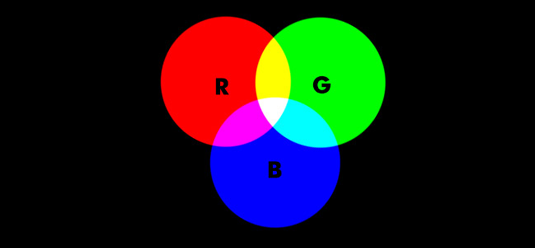
Additive colour whole caboodle with anything that emits or radiates light. The mixture of different wavelengths of promiscuous creates different colours, and the more light you add, the brighter and lighter the colour becomes.
When victimisation additive emblazon, we tend to consider the building block (capital) colours to be red, William Green and blue (RGB), and this is the base for all people of color you manipulation connected covert. In additive colour, white is the combination of colour, while inkiness is the petit mal epilepsy of people of color.
02. Subtractive
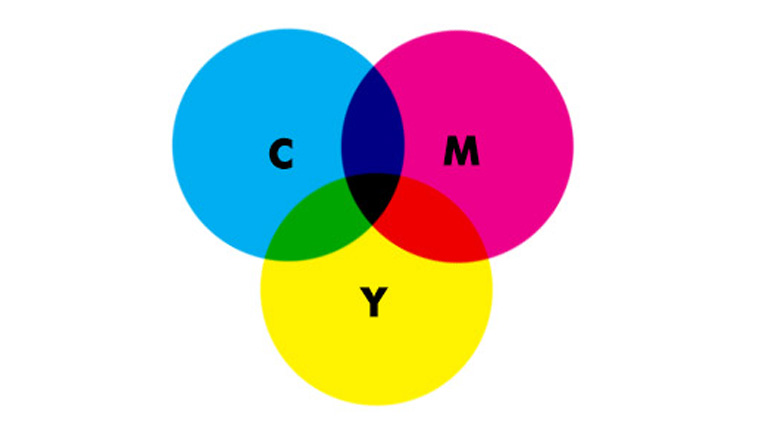
Subtractive colour works on the basis of reflected undemanding. Kinda than pushing more light out, the way a exceptional pigment reflects contrastive wavelengths of light determines its apparent colour to the human optic.
Subtractive colour, like additive, has three primary colors – cyan, magenta, and yellow (CMY). In subtractive colour, white is the petit mal epilepsy of colour, patc black is the combination of colour, simply it's an fallible scheme.
The pigments we have available to economic consumption don't fully absorb frivolous (preventing reflected colour wavelengths), so we have to ADHD a fourth compensating pigment to account for this limitation. We shout out this 'operative', therefore CMYK, but essentially it's black. Without this additional pigment, the closest to black we'd personify able to render in photographic print would constitute a boggy brown.
The colour wheel
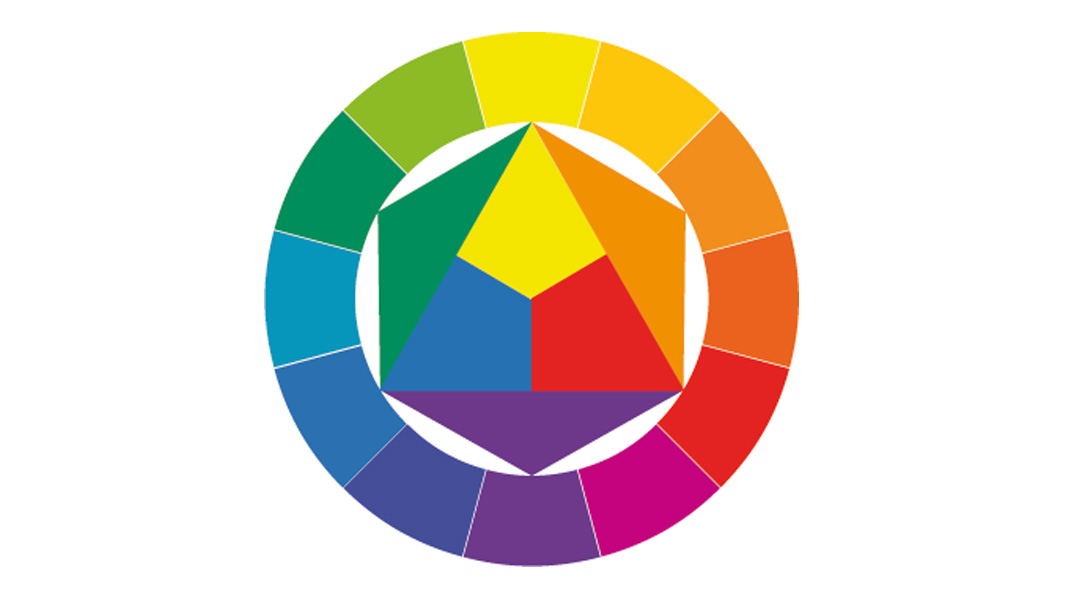
Ready to brand it easier to see the kinship between different colours, the concept of the innovative emblazon wheel was industrial around the 18th century. Although colours exist on a continuous spectrum, it helped artists to break them down into individual blocks that could be named.
Color wheels show the primary colors (conventionally ruby-red, yellow and blue in painting) on the outermost ring. The tributary colours are created past mixing two important colours – if red, dirty and yellow are the first colours, the secondary colours are green, orange and violet. Tertiary colours are then created by commixture a primary with a secondary colour.
Note that using red, yellow and blue air as the primary colours is not entirely accurate since green and blues in reality take up more of the colour spectrum. As a resolution, sometimes alternative color wheels are used, such as red, blue and green, or cyan, magenta and yellow. IT is conceivable to mix traditional primary colours with these alternative discolour wheels, though they won't be as intense as pure pigments.
The colour wheel allows us to see at a glance which colours are complementary (reverse on the wheel), analogous (connected on the wheel), triadic (troika colours positioned at 120 degrees on the bike from each other) etcetera (catch below). Each of these relationships can produce pleasing semblance combinations, and there are many more good relationships between colours based on their put on the roulette wheel.
Complementary colours

Complementary colours sit opponent each separate on the colour roulette wheel. These pairs have the highest distort contrast, so they often look very intense when placed next to each other. Two saturated antonymous colours lavatory sometimes clash and strain a witness's eyes, especially in close proximity, so it dismiss be better to check that matchless of them is more neutral if you're going to use them together.
Mixing two complementary colors together produces a neutral grey, operating theater even a black, as they cancel each other out. The greys in the centre of the colour wheel can be created in that path.
Analogous colours

Analogous colors sit down next to each other happening the coloring material pedal, so they get less tinge contrast and therefore harmonise easy. In fact, sometimes they fit in also easily, which means you might want to attention deficit hyperactivity disorder contrast in these sorts of combinations, for example by pushful the tonal or saturation contrasts (or some).
When mixed together, analogous colours produce bright intermediary hues. The finisher two colours are happening the gloss rack, the more intense their mixture is. The further divided they are, the duller the mixture.
Triadic colours

Triadic schemes comprise trine colors that are evenly single-spaced around the colour wheel. This type of dodging can be challenging if you'atomic number 75 victimisation saturated colours as it wish include a large area of the wheel, which makes vividness counterpoint hard to deal. Incomparable solution is to pick a dominant distort and let the former two support it as more subdued tones.
Another pick is to attach a triad of saturated colours jointly with whites. This allows the eye a break and reflects delicate indications of the triple. Alternatively, triad colours can be utilised in small amounts to 'spice up' viewless arrangements.
Split complementary colours

Split complementary color schemes are like antonymous schemes, but in this case, one of the colors is split into two. The separate gloss sits opposite the centre point of this pair. The separation between the split span posterior constitute narrow or can expand until information technology transforms into a triadic system.
This kind of scheme is a good choice for a limited palette because it offers the musical harmony of a complementary colour scheme while cover more ground along the colour wheel and including a wider range of colours. Complementary schemes sometimes rip some colours (this is sometimes called a tetradic scheme). They work especially intimately if the range of each partner off is limited.
There are free apps for picking a color scheme, or you could use your decorator's eye to pick your own. Click through to the next page for a little service on this.
Next page: the three components of colour, colour gamut, and more...

Sam is a decorator and illustrator based in Scotland. He splits his time between art and purpose, motion and video and writing for various creative titles.
Corresponding articles
Source: https://www.creativebloq.com/colour/colour-theory-11121290
Posted by: lanoueproatest40.blogspot.com
0 Response to "Colour theory: The ultimate guide - lanoueproatest40"
Post a Comment